
ABRAXAS MODS (![[personal profile]](https://www.dreamwidth.org/img/silk/identity/user.png) abraxasmods) wrote2021-09-29 10:57 am
abraxasmods) wrote2021-09-29 10:57 am
abraxasmods) wrote2021-09-29 10:57 am


BESTIARY ◎
Bestiary
quick links
CW: Some linked images may contain horror-based artwork or other unsettling imagery.
Abraxas has plenty of common flora and fauna based on the climate of each territory, such as deer, wolves, fish, sheep, various herbs, and so forth. However, monsters and other unusual animals are equally a part of the world. These creatures are not always dangerous, but many can be. They're often found outside of the main settlements and cities.
Locals of Abraxas make use of these creatures similar to regular animals: fur, teeth, feathers, and claws are all desired for various potions and alchemical creations. They'll pay money or be grateful for any help they receive in culling some of the wildlife that bothers their crops and livestock or makes traveling dangerous.
The bestiary is organized by location and habitat. There are also domesticated breeds available in major territories for purchase. Aggressive creatures are prone to attacking while passive creatures only strike if threatened or actively disturbed. Harmless creatures don't attack at all. Use the Quick Links above to navigate to each section.
Players can make up with creatures to add. Submit a description and image HERE to have your creature included.
Accessible Areas
Accessible areas include the three major territories and Nocwich. Characters generally have free access to these places and thus an open opportunity to run into the creatures listed. While most major cities and settlements are well-protected, the wilderness or rural areas often contain greater threats. Aquatic creatures are in their own category and can be found in all bodies of water across Abraxas.
Kingdom of Thorne
The City of Castle Thorne has few threats, but the rural areas around Nott and Lake Circinus may contain more dangerous beasts. Harmless creatures like birds can be found inside the major cities.
Mountains
Ertheira [ IMG ]
Aggressive
Rare beasts that roam high in the mountains. They keep to themselves and only attack if disturbed - often by careless hunters or lost travelers. They're otherwise seen eating deer and fish. They enjoy berries but have been known to put the entire spiky berry bush into their jaws rather than eating the individual fruit.
Gryphon [ IMG ]
Aggressive
Large mammals with the wings of an eagle and the body of a lion. While rare, they live on high mountain peaks in the forest and are extremely protective of their young. They tend to hunt deer and wolves but will scavenge during winter when food is scarce. Be careful not to disturb their nests.
Flamewing Spoonce [ IMG ]
Harmless
These birds are so-named for their fiery coloring, but they are not actually flaming. Believed to be a distant cousin of a gryphon due to its two small paws, Flamewings are rarely seen except when they begin their migration from their nests in the mountain during the spring, taking their fledglings with them. They are friendly.
Frost Drake [ IMG ]
Aggressive
Also known as a winter wyvern, the frost drake lives on the highest peaks. Unlike most animals, it lays its eggs when the weather turns cold and buries them under the snow to hatch. Occasionally mistaken for a dragon, the frost drake is incapable of breathing fire and is much smaller. It unleashes a spray that resembles frost breath but is actually a corrosive acid that leaves behind severe burns.

Aggressive

Aggressive

Harmless

Aggressive
Forests
Madrleag [ IMG ]
Aggressive
These wolf-like animals are covered in vines and leaves. They blend seamlessly into the forest and hunt in packs. While normally shy and elusive, they've been known to attack pets, livestock, and even people when their natural territory is disturbed and they're driven out in search of food. If you run into one in the wild, your best bet is to quietly leave—especially during spring, when their pups are newly born. Their leaves are occasionally used for medicinal purposes.
Mammoth Boar [ IMG ]
Aggressive
Giant boars that travel through heavy snow, leading their young as spring starts to arrive. The mother boars are often highly aggressive during this period as a result, and it's suggested to be best to stay out of their way rather than attempt to fight them. They have thick, tough hides and heavy furs to protect them.
Verdant Beetle [ IMG ]
Harmless
These large beetles consume small pests that commonly take over gardens and farms. Farmers often release them into their fields to prevent their crops from being eaten by more destructive insects. They make a chittering noise that fills the forests in summer.

Aggressive

Aggressive

Harmless
The Free Cities
All desert wildlife can be found in The Badlands, but the Badlands and its underground caverns contain even greater threats not seen elsewhere. The deeper one travels into the Badlands, the more dangerous it is. Areas near the city walls or its surrounding hillsides are relatively safe, though creatures along the lines of snakes, wildcats, and venomous insects might still appear. Rodents, birds, and lizards are common in the cities.
Hillsides
Chaigon [ IMG ]
Aggressive
Large mammalian creatures that could be mistaken for armadillos the size of cows, aside from the prominent spikes that cover their body. Territorial and become highly aggressive if approached in the wild. Or if they think they're being approached.
Grassback Spider [ IMG ]
Passive
About 10-12 inches across with a grassy back camouflage. Generally harmless, unless disturbed. Their camouflage is excellent, which leads to people stepping on them from time to time. Most active from dusk to dawn, they hide during the brightest parts of the day. Their venom will cause a painful rash and fever, but is not life-threatening and can easily be treated. The tuft of grass on its back has some color variation to better match its habitat. Those in the plains might be greener and those in the desert more yellow or tan. Occasionally found in the city, though not commonly.
Hundun [ IMG ]
Passive
A faceless, furry being with wings and six feet, Hundun are friendly, sociable, and occasionally shy. Think of them like wild rabbits. No one has observed how they eat or drink or actually do much of anything at all, leading to the - probably - joking rumor that they are beings of primordial chaos. Hundun are not domesticated and are impossible to tame. However, if they decide they like someone enough, they may follow that person home or seek that person out when nearby.
Jumping Sandskid (Juvenile) [ IMG ]
Aggressive
While their adult versions are only in the Badlands, younger sandskids may be found closer to the outposts and city. Juvenile sandskids spend the majority of their time eating - and they'll eat just about anything alive, from large insects to livestock and even humans. Larval sandskids are most dangerous as they're ravenous while they grow, and often hunt in groups. Their jaw unhinges in a way that pushes their long top fangs forward to sting prey with their venom, which has a painful, paralytic effect. A pack of larval sandskids can fell and eat a horse down to the bones in half an hour or less. They move in a cross between skittering and slithering, pushing themselves along with their sharp little legs, and can raise up on their tail ends.
Sand Scorpion [ IMG ]
Aggressive
The size of a cat, but is otherwise a typical scorpion with sharp pincers and a stinger on its tail. They're not especially dangerous and their venom is surprisingly weak, meant to take down rabbits and rats rather than humans. Their hard shell requires some force to crack through, though they are susceptible to fire. Their stingers and venom are in frequent demand by local apothecaries.
Striped Sandcat [ IMG ]
Aggressive
A wild cat about the size of a cheetah. It has a long tail with a more heavily furred tip. Its coat provides camouflage and can come in more reddish coloring or sandy brown depending on the region with variations on how prominent the stripes appear. Usually a solitary hunter, found roaming the deserts and dry hillsides. Females make their dens in rocky caves and often have a litter of about 2-3 cubs, which stay with the mother for up to two years learning to hunt. They will become aggressive if their territory is encroached upon or their young are threatened, but otherwise rarely bother humans. They may go after poorly attended horses and livestock. Similar to cheetahs, they do not have retractable claws. Prized among traders and consumers for their unique fur patterns, these wildcats have been hunted into population decline. Their fur is now very expensive.
Sundew [ IMG ]
Passive
Vaguely resembling a Venus flytrap, hence the name, these floral-like spiders hide among cacti and flowers in the desert hills. They won't attack humans, but like all arachnids, if they're threatened, they'll bite - and their sting is particularly painful if not deadly. Bites from a Sundew can swell and pus for up to a week before subsiding and often leave a small scar behind.
Aggressive

Passive
Passive

Aggressive

Aggressive

Aggressive

Passive
The Badlands
Absorber [ IMG ]
Aggressive
The Absorber travels beneath the desert sands. Its strange claw-like appendage contains multiple eyes and is used to look above the surface, searching for prey. Once it finds something to eat, it'll pierce it with its sharp claws, paralyzing its victim and then dragging its meal under the sand to feast. The paralytic poison can last up to 24 hours. Even those who survive the initial attack can succumb to other predators or the elements, unable to move. Few ever see the Absorber's full form. Typically, only its appendage is ever seen roaming above ground.
Chimera [ IMG ]
Aggressive
A fusion of multiple animals, the chimera absorbs each creature it feasts on into a part of its body...or so goes the legend. Some stories claim you can even see the face of a human victim in it. The fact is, nobody knows why it looks the way it does. Most don't get close enough to ask. Its attacks are unpredictable due to its varying features, and can range from a venomous tail to armored plating. What's consistent is that it's got a lot of teeth and it's very big.
Dust Wraith [ IMG ]
Aggressive
Formed from the desert itself, rumor has it that dust wraiths are malformed spirits of unfortunate travelers lost to the wasteland. While mostly incorporeal, their heads can be struck. They have claws that will shred flesh to the bone. When attacked, they release an ear-piercing screech that shakes the ground. Unlike other beasts, not much can be harvested from these wraiths. Upon death, they collapse into little more than a pile of dusty sand.
Howler [ IMG ]
Aggressive
Standing as tall as a grown man, the Howler emits a constant bat-like shriek to find its way. It lives in caves and emerges during the night to travel across the desert in search of prey. While completely blind, it can sense tremors across the sand and is quick to strike. It has a vicious sting on its tail, which can be fatal if not treated within 48 hours, and which causes immense pain. Reclusive by nature, these creatures rarely venture close to the city, but travelers who stray too far into the desert might find themselves a victim.
Jumping Sandskid (Adult) [ IMG ]
Aggressive
Once a juvenile sandskid bulks up to the point its legs can no longer support its weight, it begins looking for a nest. It burrows into the sandy ground, its hardening carapace and now-larger jaws allowing it to dig deep and move slowly through burrows under the desert earth. Now, it transitions into a life of waiting for food to come to it instead of hunting it down. When it senses potential prey nearby, an adult sandskid will push its upper half abruptly through the sand and rocks covering it, jumping out of the ground and trying to snap up its next meal. Since their likelihood of encountering food is highest at night in the desert, they're most active after dark but are diurnal and can attack during the day as well.
Kaskadura [ IMG ]
Passive
Sometimes known as the piranhas of the sky, Kaskadura are fierce winged insects that can swarm a carcass and devour it in minutes. They are scavengers and will rarely attack healthy creatures. Unfortunately, animals and humans alike who injure themselves badly in the wild can find themselves being swarmed alive if they are too weak to move or fend off the insects.
Outrice
Aggressive
A large flightless predatorial bird with dull red and brown feathers, vaguely resembling an ostrich but with red scales rather than skin on its featherless head and long legs. Its neck is thicker and feathered and its beak and talons are wickedly sharp and curved to tear easily through flesh and bone. It will go after humans.

Aggressive

Aggressive

Aggressive

Aggressive
Aggressive

Passive
Aggressive
Caves
Basilisk [ IMG ]
Aggressive
Roughly the size of large cats, these reptiles live in groups and can be found where the climate is most dry. They nest underground and in caves, and have a poisonous breath that can leave even the sturdiest of men paralyzed. Nocturnal by nature, they emerge during the night to hunt before retreating.
Bladed Spiorad [ IMG ]
Aggressive
Blind as a mole, it prowls deep in the Badlands' desert caverns and hunts using a combination of scent and hearing. Because it can't see, all warm flesh will attract its hunger. Reptiles are safe from the Spiorad as long as they aren't injured since they're cold-blooded. It has an armored spine and razor spikes on its tail, but its unarmored skin is thin and leathery. As they don't usually go above ground, few have encountered these creatures.
Cerotida [ IMG ]
Aggressive
Large, with sandy and brown coloring to blend in except for its red throat, which only the males have. They're rare and nest in caves located on high cliffs. They usually don't venture close to people unless they're disturbed or can't find enough to eat. They mate for life and lay their eggs in the late spring. The plating on their heads protects them in a fight. Also found more commonly in the mountains close to the Singularity.
Copper Spine Wyvern [ IMG ]
Aggressive
The Copper Spine is a wyvern that nests in caves located high up on mountain cliffs. Though not very large, they move with exceptional speed and can cover large distances in a short amount of time. During times of scarcity in the desert, they'll scavenge and even attack humans for food. Their claws contain a venom that causes painful convulsions.
Plorrok [ IMG ]
Harmless
No bigger than a mouse, plorroks prefer caves that are cool and damp. They eat small insects and can be found scurrying just about anywhere. Cave divers all over Abraxas will find these tiny lizards. They're surprisingly friendly and completely harmless. Their eggs are considered a delicacy. They breed fast, so there's no shortage of eggs to be harvested.

Aggressive

Aggressive

Aggressive

Aggressive

Harmless
Solvunn Commune
Solvunn's farmlands tend to contain pests and modest threats to livestock. Traveling along unguarded roads or going deep into the forests and swamps can result in more dangerous encounters. Woodland guardians, forest spirits, and helpful gardening creatures can also be found closer to the Settlements. Of course, don't forget the Gods.
Grasslands
Jesztomadar [ IMG ]
Aggressive
A giant multi-limbed raptor that roams the open grasslands. They are extremely rare - only one or two have ever been seen - and are never near the settlements. Those who venture very deep into the wilds, though, may find themselves an unfortunate victim of the Jesztomadar, which is fiercely territorial. They feast on deer and have vulnerable underbellies.
Mafjult [ IMG ]
Passive
A mole-like creature that burrows close to the surface and can establish an entire colony within a matter of weeks. They abhor the sunlight so they are most often caught at night. Often traveling in packs, they can become a great nuisance to a farmer's fields.
Shrieking Weed [ IMG ]
Harmless
Exactly what it says on the tin. These creatures hide in gardens and crop fields, appearing exactly like a weed on the surface. If you pull one up, however, it will release a shrill scream. Aside from waking the neighborhood with their shriek, they're otherwise harmless and don't disturb any plants or crops if left alone. Rumor has it that letting one live in your fields or garden is good luck and will keep pests away. They can also be found less commonly throughout other areas of Abraxas including the desert and forests, though they prefer to avoid harsh winters.
White Gevat [ IMG ]
Harmless
These small rodents can be found anywhere with tall grass and flat lands. The small wings allow them to hover and glide, but they cannot fly. Their main diet consists of small insects and wildflowers. Many consider them vital as a part of pest control, as they eat the insects and weeds that might otherwise overtake the area, but they can also be a nuisance if they get into your pantry.

Aggressive

Passive

Harmless

Harmless
Woods
Forest Spriggan [ IMG ]
Harmless
Friendly and intelligent, the forest guardians lurk in the woods and around abandoned settlements. Though they like to make trouble, they aren't dangerous and will overcome their shyness if you're patient and bring along some food. Berries are their favorite treats. If you've helped them, they'll acknowledge you with a little dance.
Lyhos Kesc [ IMG ]
Disposition
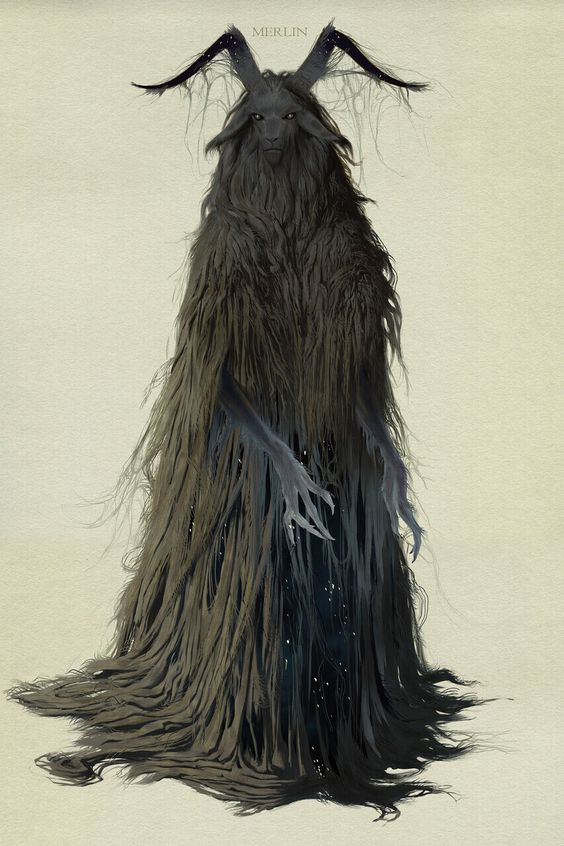
A bipedal goat-like creature covered in hanging moss. Difficult to spot in the dark and emerging only at night, the Lyhos Kesc is best spotted by its glowing eyes peering between the trees. Although it tends not to attack unless provoked, its very presence can cause unsettling nightmares and a sense of dread that makes sleep near impossible. It's said spells of warmth and comfort, as well as the close proximity and companionship of fellow travelers, can help ease the effects. Lone travelers are most susceptible to the impact that the Lyhos Kesc leaves.
Skógareldar [ IMG ]
Passive
A long, smoky body that can extend from one to several meters. It can grow a head and limbs if it chooses. Only seen at night, they will visit campfires or flames in general. They are a distant observer of happenings but can be called out to. Aggression is treated with aggression. If left alone they will feed off the smoke until the fire is extinguished or until dawn. Being too close to one may result in smoke inhalation and respiratory problems. The Skógareldur is believed to be a manifestation of the wildlife that died during forest fires. Can also be found on grasslands after fires, but less common.
Wandering Oak [ IMG | IMG ]
Passive
True to the name, the Wandering Oak can be found wandering about the base of mountains and other forests. They are typically found in groups of five or more and move in unison to new locations where they settle down for a few months at a time, tracing nutrients in the ground. It is said that the "seeds" they deposit after are the beginnings of new fertile land for the coming years. They are generally uninterested in the comings and goings of man but will attack when met with aggression and can seriously harm those who aren't prepared. Their seeds are also ground down into a powder used to boost fertility and virility. Do not stare at its rump.
??? [ IMG ]
Aggressive (towards goats)
The Summoned present for the Rift Anomalies might realize where this creature came from, but the people of Solvunn are unaware. Goat farmers are especially vigilant and believe that one of the Gods must've sent this beast along to cull the herd. It bears no name.

Harmless
Disposition

Passive
Passive

Aggressive (towards goats)
Swamps
Bleeding Heart [ IMG ]
Passive
No doubt disturbing to encounter when in the dark and dreary marshes, Bleeding Hearts are harmless foragers who live among the vegetation. Their elongated fingers and arms allow them to dig deep into the wet earth to uncover worms, snails, and other insects. Their bright red coloring warns off predators. Ingesting any of the slime covering its skin will cause even a grown man to experience high fevers and vomiting. Incredibly rare, they will lumber off and vanish when spotted.
Cephalofrog [ IMG ]
Harmless
Small and comes in a variety of earthy tones--greens, browns, dark reds. Skittish and docile, the cephalofrog is a cephalopod that evolved to live above the water for half the time and can be found swinging from trees during the day to hunt insects. If it thinks it's been spotted it will hold still and try to blend into its surroundings. It takes to the water at night and buries in the sediment.
Irrwisch [ IMG ]
Dangerous
Also known colloquially as will-o'-the-wisp, these hypnotizing lights can lead unsuspecting, weary travelers astray. Anyone aware and of sound mind can usually resist the call of the lights. Legend has it that these lights belong to a small gnome-like creature who will feast upon your soul, but no one has ever seen the maker of the wisps and returned. Those who follow it are lost forever to the marshes and swamps.
Krokot [ IMG ]
Aggressive
A large and rare reptile that spends much of its life laying still beneath swampy waters. They are motionless for so long that algae and moss grow on their backs, which sometimes makes them undetectable from fallen trees and other small landmasses within their natural habitat. Luckily, they are so rare that you can likely step across most logs without worry that you will lose a foot or two. Probably. No one has ever seen a baby krokot.

Passive

Harmless

Dangerous

Aggressive
Nocwich
Also known as the sunless lands, Nocwich's eternal night has given rise to unusual creatures that only thrive in their woods. The Hunting Woods are open to all visitors. While the wildlife inside the Hunting Woods can be dangerous, it's designed to be a formal hunting ground. As a result, it won't contain anything overly deadly and the Guardians of the woods are nearby to minimize any unfortunate accidents.
Hunting Woods
Ceknias [ IMG ]
Aggressive
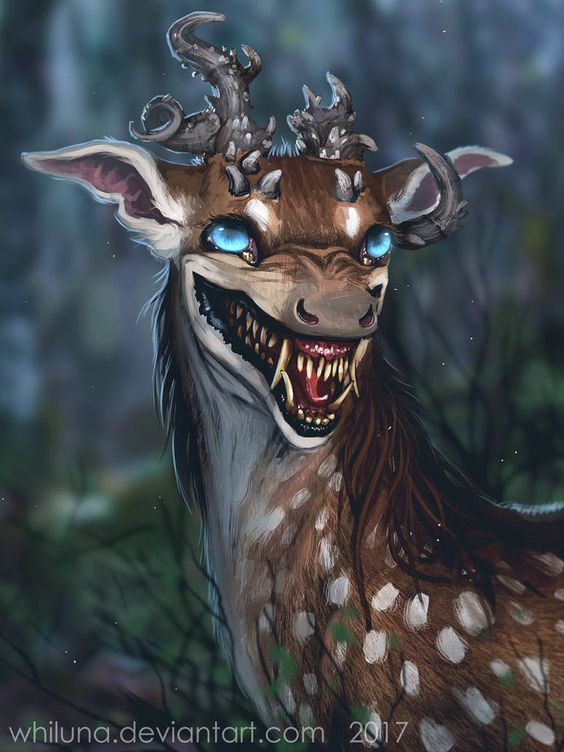
Their curling horns show their age. The oldest and largest of them have horns which protrude and twist all the way down their necks. These horns are valuable to the werewolves of Luna, which makes them common targets for hunting. Their eyes light up that bright color when there's something they have determined as prey in their sights - beware if you see eyes that bright in the darkness. These creatures won't stop until one of you is dead. Many unfortunate travelers have been lured in by their call, which sounds like a woman crying. They often hunt in herds and confuse predators into thinking they're prey.
Dreunania [ IMG ]
Passive
The largest and oldest of them sometimes fall into deep slumbers, allowing moss and small vegetation to grow over them. Smaller creatures will often take refuge and make homes within their skulls or backs. When they wake up, the bigger ones continue to carry around entire unique ecosystems upon them. Some of the most precious herbs and flowers only grow on the backs of Dreunania, and many alchemists and healers will hire people to gather these ingredients. This can be dangerous work due to the creature's size and nearby predators. It's also possible to find two linked and entwined together, like conjoined trees. As entwined Dreunania are rare, they are considered a good luck omen, and killing the pair is frowned upon. Legend has it that once upon a time, all of the world was carried on an ancient Dreunania's back.
Gealaci Kucing [ IMG ]
Aggressive
Common predators in Nocwich's woods, their tail is vaguely hypnotic, used to lure in prey like an anglerfish allowing them to more easily go for vital areas to bring it down. They leave behind bioluminescent mushrooms in their path which sprout up from the blood of a slain prey. They can climb to the tallest trees and wrap their tail around them to lie in wait for a meal to come by underneath. One folktale tells of a Gealaci Kucing who leapt into the sky to chase its prey, but its tail was caught in the stars and snapped off. What's left became the moon and its varying phases, which change each month when the creature leaps up to try and fail to retrieve its tail - succeeding only in moving it a little, back and forth until the end of time.
Fisceime [ IMG ]
Passive
Available in large numbers and herds, they are one of the most popular game in Nocwich, especially among the werewolves. When threatened, their head and antlers turn bone-white, which serves as both a threatening display and a warning to their own that danger is around. They are exceptionally fast and very difficult to catch. Unskilled hunters will often miss with their arrows. While blind, they rely on their keen sense of smell to find food and avoid hunters. They're known to be attracted to pungent scents like rotten cabbage, which some hunters use as bait. Their calls to one another mimic a weeping human.
Torcainse [ IMG ]
Aggressive
The size of a large boar, these creatures give off a strong burning smell that permeates the area before it is seen. Weapons made out of their front nose horn are nearly unbreakable due to how thick the bone is, while their bacon is considered a delicacy in Nocwich because of how difficult it is to fell one without ruining the meat. Loud sounds of crashing in the darkness are often associated with torcainse uprooting trees. No one has been able to discern why they do this and many have begun to question if they even have a reason. Torcainse can be some of the most aggressive animals in the woods. Story has it 30-50 feral torcainse once surrounded a local's mushroom farm, resulting in a night-long altercation.
Aggressive

Passive

Aggressive

Passive

Aggressive
Within City
Cyfaill [ IMG ]
Harmless
These small insects are found commonly throughout Nocwich's woods. Because of how shy they are, it's considered good luck if one lands on you. While harmless, some larger predators may be worked up into a frenzy in their presence (regardless of their normal disposition) to catch their meal, with no care of what or who is in their way. They secrete a sugary green goo that is popular for recreational use and many who indulge claim they feel as though they are floating in one of its glowing green orbs. Take care when buying sweets in the Square.

Harmless
Aquatic
Oceans and lakes contain similar wildlife across Abraxas based on climate and depth. As a result, they've been placed in their own location category.
Freshwater
Flat-tailed Grokko [ IMG ]
Passive
From the surface of the river, these creatures appear little more than mounds of mossy earth. They lie still in wait, sometimes not moving for hours or days, except to snap up unsuspecting insects that fly by. They have a preference for dragonflies and fireflies but will eat nearly any bug and, on occasion, small fish. They are not a threat to people, though anyone who gets too close might risk losing a finger to its powerful snapping jaws for the Grokko has poor eyesight and will bite at anything hovering in its vision, believing it to be food.
Kelpie [ IMG ]
Aggressive
A water spirit that appears in the shape of a horse. They may appear friendly at times but are considered highly dangerous. While they may offer a ride on their back, these creatures have been known to take their victims to the shore, drown, and devour them and not even in that order. They are typically solitary.
Sabol [ IMG ]
Passive
Goat-like mammals that live by lakes and rivers, and are capable of sprinting across the surface of the water. They are skittish and run from people more than they attack them, but if cornered, they have powerful hooves and a sharp horn that will leave a mark. Their horns are valued for making jewelry and charms.
Rust Shrimp [ IMG ]
Passive
Lurking under the lakes, rust shrimp are so named because their bite hardens the patch of surrounding skin into a thick rust-colored plate. They tend to be caught in fishing nets or disturbed by swimmers who dive deep. Their bite is only a mild sting and the rust-like plate will fall off in a week or so, leaving behind surprisingly smooth and soft skin underneath. As a result, those who are especially bold have used these shrimp in controlled settings for skin treatments.

Passive

Aggressive

Passive

Passive
Saltwater
Beh Dukah [ IMG ]
Harmless
A small and friendly amphibian often seen off the shores of coastlines. Most active in warmer months, they prowl the sandy floors hunting for crustaceans. They live in large social groups and are unafraid of strangers and boats. They can be tracked above water by reflections off their iridescent skin.
Great Piscorum [ IMG ]
Passive
A massive whale-like creature with a colorful fan fin tail and flippers. They come in a variety of colors and patterns, and the sight of them crossing the sea to the west is a majestic one. The migration travels through Borrel's waters each year and can be observed from high points on the shore. For a small fee, locals will take their boats out as close as is safe for a closer view.
Pagong [ IMG ]
Passive
Generally a peaceful animal, the younger pagongs will keep very close to the shoreline and continental shelf while older, larger pagongs can be found in the open sea. As adults, they live in large groups of sometimes up to one hundred. They are omnivores and feed on algae and underwater vegetation as well as fish. The shells are considered quite valuable and there has been an issue with over-hunting the pagong. To watch a pagong spawn is said to bring good luck in the coming year.
Pronged Pillbug [ IMG ]
Passive
Technically a crab, but the name's stuck. These crabs are the size of an apricot and are found commonly on a variety of beaches, from rocky ones to sandy shores. In rocky habitats, they curl up into a ball to resemble a stone themselves to blend in. In sand, they will burrow underneath and hide there. They're easy to catch when the tide is low and make for a tasty snack in a pinch. During mating season, parts of the ocean can light up with the glow of their eyes at night.

Harmless

Passive

Passive

Passive
Abyssal
Dosarak [ IMG ]
Aggressive
With insect legs and octopus-like tentacles, the dosarak lives deep in the ocean. Sometimes, though, it'll make its way towards shallower waters to feed. Lacking eyes, the creature will bite anything that comes near, including sharks, whales, and even small boats. And, of course, people. Beware when taking a swim in stormy waters. The shed skin of their exoskeleton occasionally washes ashore.
Leviathans [ IMG ]
Aggressive
Known collectively as "leviathans," these enormous sea beasts vary in size and features, though the teeth are often a defining aspect. The largest ones are rarely seen except at the darkest depths furthest out to sea, but smaller leviathans - roughly the size of a whale - may surface more often and are known to capsize ships on the ocean, especially during storms. It generally takes a group of 3-4 to wrangle one of these into submission. Most sailors will tell you that sailing away is much safer than trying to kill them.
Sea Giants [ INFO ]
Passive
Sometimes lumped in with the more dangerous and teeth-filled "leviathans" by locals, sea giants are the leviathans' gentler cousins. They come in a variety of lifeforms including jellyfish, sharks, and turtles, but the defining feature of each is their massive size. Rare to leave their homes deep beneath the waves, they're seldom seen by people.

Aggressive

Aggressive
Passive
Restricted Areas
Restricted areas include the Singularity's crater, the Feywilds, and the Nether. Characters have visited these locations in the past, but are unable to freely return outside of specific plots or events. The creatures in restricted areas are recorded for your reference. Characters may have the chance to interact with them again in future events.
The Feywilds
Many creatures in the Feywilds present as massive versions of familiar wildlife: caterpillars as big as your leg, frogs as large as dogs, and snakes fifteen feet long and wider than a man. They tend to have additional changes, such as extra eyes, wings where they don’t belong, and rows of razor-sharp teeth.
The Duskwoods
Blooming Silk Spinner [ IMG ]
Aggressive
Despite its massive size, this arachnid is a near-silent hunter. They hide unmoving for days in the dense brush. To warn off others, it'll make a clicking noise. They can spin and shoot delicate fine silk that appears nearly invisible, causing their prey to look as though they're frozen in midair. To lure in prey, the Silk Spinner will burrow underground until only its blooming head is exposed, resembling a large flower. The floral head then releases a sweet scent that mimics a common flower to attract its food. Adult Silk Spinners incubate eggs inside their abdomens, which then burst spectacularly when hatched. Hatchling Spinners will feast on the carcass of their mother as their first meal. Dangerous even when young, hatchlings appear as small red buds that scurry around and swarm smaller animals alive.
Daggermaw Slug [ IMG ]
Aggressive
Growing up to the size of a rat and considered a tasty delicacy among the Fey, the Daggermaw slug possesses a large scent gland in the lower half of its underbelly that reeks if bitten into. Removing it without puncturing the sac is essential for consumption. While false eyes on insects are not uncommon, if you study the slug long enough, you'll notice the eyes moving and watching...suggesting that they might be real. Indeed, these slugs are near-impossible to sneak up on. Anyone who tries will receive sharp claws flung at them, which regrow in seconds. The eyes themselves are delicate and easily damaged, making them a rare and desired part to eat. Old tales claim boiling them renders the dish poisonous, though this is untrue. It does, however, turn the taste foul.
Gargantuan Viper Hydra [ IMG ]
Aggressive
One of the most aggressive species in the Duskwoods, the viper hydra will hunt any prey regardless of size. Each head has a separate attack: corrosive spit, a venomous bite, and a hypnotic gaze. The hydra will use its three heads in conjunction to coordinate an attack. Its spikes, once lodged into the skin, cause a rapid-acting hallucinogenic effect that can kill a grown man. The hydra is most vulnerable during hatching season in the spring when its venom sacs are replaced with protein-rich milk to feed its young. The Fey harvest the milk for its anti-venom usage. The hydra can survive the loss of up to two heads. These heads do not regrow.
Greater Fan-Throated Lizard [ IMG ]
Passive
Slightly larger than a Komodo dragon, this lizard is said to sound like laughing children when they chitter in groups. Poisonous ridges can cause numbness in the extremities. Be careful when its pink underside turns gold: it'll shortly unleash a paralyzing electric shock that lasts hours - deadly in the Duskwoods. One cure says to convince it to give you a pink feather, which you must then swallow. Whether the Fey genuinely believe this tale or merely enjoy pronouncing it as fact to outsiders is unclear. They reproduce by laying egg-like seeds that grow from seed pods on a plant.
Iridescent Wispwolf [ IMG ]
Passive
Elusive and wary, the Iridescent Wispwolf is a rare sight to behold. Females are noticeably larger than males of the species. While they are generally solitary creatures, females sometimes raise their young communally. Wispwolves shed the golden wisps when they become too long or are damaged, using the underbrush or trees to tug them free to make room for new growth. The discarded golden wisps are often collected to be spun into a highly prized silky material. Wispwolf cubs have many more ribbons that shed as they mature and don't display their pink crest until they're adults. This crest exudes a pheromone that attracts a mate but makes them scentless to their prey and predators. Poor swimmers and prone to drowning in open waters, the many shallow ponds and small lakes in the Feywilds make for an ideal home.
Spindled Pear Moth [ IMG ]
Aggressive
So-named for the shape of its cocoon, the adult moth emits a cloud of opalescent, hallucinogenic dust when disturbed and will attack aggressively. Though a single dosage will cause only mild disorientation, the moths tend to swarm when hunting and can cause grown Fey to stumble through the woods in a haze for hours. Their larvae nest in the underside of the wings. They eventually fall out when they hatch into their adult forms. Their call and response mimic happy, chittering birds to lull their prey. Fey children can fall victim to this if not strictly warned. Intriguingly, these moths exhibit lifelong monogamy. At certain times of the year, their aerial displays of swarm-wide courtship dances are as lovely as they are dangerous.

Aggressive

Aggressive

Aggressive

Passive

Passive

Aggressive
Within City
Humming Sunstripe [ IMG ]
Passive
Their honey pellets are a popular delicacy in the Feywilds. These insects can be smoked out or put to sleep, but have a vicious sting that will itch fiercely for 12 hours, so collecting their pellets is a delicate task.
Grinning Longhorn [ IMG ]
Aggressive
One of the most challenging creatures to mount. Riders must be swift and agile getting on, or else it may kick, gore, or bite from impatience. Once mounted, the Longhorn is the most versatile and easiest to direct, following its rider's wishes through unexplained intuition. They can traverse steep, near-vertical surfaces.
Luminous Greatshell [ IMG ]
Passive
A massive snail that travels quickly over flat ground and across lakes, leaving behind a slick shimmer. Its intense speed makes handling difficult. Greatshell races through the winding Misty Rivers are a popular activity among the Fey.
Pearl-Eyed Leaper [ IMG ]
Disposition
An oversized lizard ideal for moving through dense treetops. It leaps from branch to branch at great heights, so handling the Leaper requires a solid grip and a steely stomach. Additionally, the Leaper can sense nervousness and will slap an anxious rider with its sticky tongue if it senses the approach lacks confidence.

Passive

Aggressive


Passive

Disposition
The Nether
The most dangerous beasts lie deep under the magma in the Nether so characters are unlikely to encounter anything too dangerous. Wildlife is rare due to the environment, though a few creatures exist for fishing and hunting. Dragons are a key feature of the Nether, sustaining its environment and the Draconae who live there.
Dragons
Adult Dragons [ IMG | IMG ]
Passive
Intelligent and possibly sentient, dragons possess the ability to imbue the land with sustaining elements like water, breathable air, and organic life. Their slow descent into extinction has caused the Nether's ecosystem to falter and resulted in the decline of the Draconae population. With each fallen dragon, less and less of the Nether remains hospitable. Only two adult dragons are left - Hierus and Kruos - making them vital to restoring the land.
Juvenile Dragons [ IMG | IMG ]
Passsive
Like their parents, baby dragons are capable of similar environmental magic, though on a much smaller scale. There are five juvenile dragons in the Nether. Because they're slow to reach adulthood, they must be carefully protected. They're attracted to shiny objects and are prone to causing trouble.


Passive


Passsive
Volcanic
Erymaes Boar [ IMG ]
Passive
Like all small lava pools in the Nether, the flowing magma from the boar's body doesn't burn as hot as it looks, though prolonged contact can still result in blistering skin. Its powerful tusks are capable of goring threats. Popular for grilling, seeing as they're one of two major sources of protein available in the Nether.
Petran Bison [ IMG ]
Passive
While large and imposing, the Petran Bison is gentle and peaceful. With their natural predators having gone extinct, they've overrun the Nether's volcanic regions. Their massive size cause frequent rockslides and they've begun invading the city's central area. As a result, hunting them is a method of population control.
Kyolas Frog [ IMG ]
Harmless
Common in the soothing cerulean magma pools the Draconae bathe in, these small frogs make a tasty live snack. They emit a high-pitched croaking that, when joined by their brethren, can create a melodic singing.

Passive

Passive

Harmless

Singularity Crater
The Singularity's Crater is an arid environment and contains many creatures similar to the Free Cities' deserts. However, the magic from the Singularity has also resulted in a few unique wildlife. Unlike people, animals can approach the Singularity and its crater without harm.
Details coming soon.
Details coming soon.
Other
This section contains domesticated breeds (pets, horses, and mounts) and Rift Anomalies. Rift Anomalies are creatures from characters' canons that entered Abraxas during a previous incident. Anomalies are rare, but some have started to breed and populate their habitat of choice, integrating themselves into the world. Cryptids and creatures of myth have been added to the Lore page.
Domesticated Breeds
Domesticated breeds can be purchased in pet shops in Thorne and the Free Cities, and from breeders in Solvunn. Exotic breeds are rare and rather costly to buy. Be aware that within the walls of Castle Thorne, pets can be no larger than a cat or a small dog. In the Free Cities, larger animals along the lines of horses may require additional expense to stable and feed them.
Common
Byat Khuu(te) [ IMG ]
Independent
A few centuries prior, a domesticated Byat Khuu (affectionately known as the "Byat Khuute" amongst enthusiasts) was introduced to the pet trade. Unlike their wild cousins - rarely encountered, given their tendency to burrow underground near the Singularity - the domesticated Byat Khuu are common pets, frequently kept in cozy glass enclosures. Their quills contain no toxins and are surprisingly soft. They are noticeably less wily and much more complacent. They do not know how to burrow into hard earth and much prefer napping half the day and running over themselves in large circles.
Eldoa [ IMG ]
Docile
These smooth-skinned reptiles are affectionate and playful, and are simple to care for, requiring only a light misting twice a day (sometimes more, in drier or warmer weather) to keep their skin cool and moist. Although their tails look as if it has a flame on the tip, it's actually just a thin orange membrane that can sometimes give the illusion of a glow in the right lighting.
Leosylph [ IMG ]
Independent
Catlike. Usually docile and sleepy, but likes to get up to mischief at night (especially the young ones). Loves high places and getting into little nooks and crannies that are a pain to get them out of. They have retractable claws and sharp teeth, so getting scratched or bitten if one doesn't like you is a possibility. They make high, trilling noises and purr when happy. They can come in a variety of colors, usually pastels like mint green, baby blue or dusty pink. Dark colors are also possible, but rare. These are often expensive boutique pets and are bred exclusively in captivity. It's said the wild version of this beast no longer exists but was much larger and more aggressive. With a lifespan of 5-10 years and soft fur, they are a popular pet for children and families. The upper class tend to own the rarer colors.

Independent

Docile

Independent
Exotic
Miniature Gryphon [ IMG ]
Independent
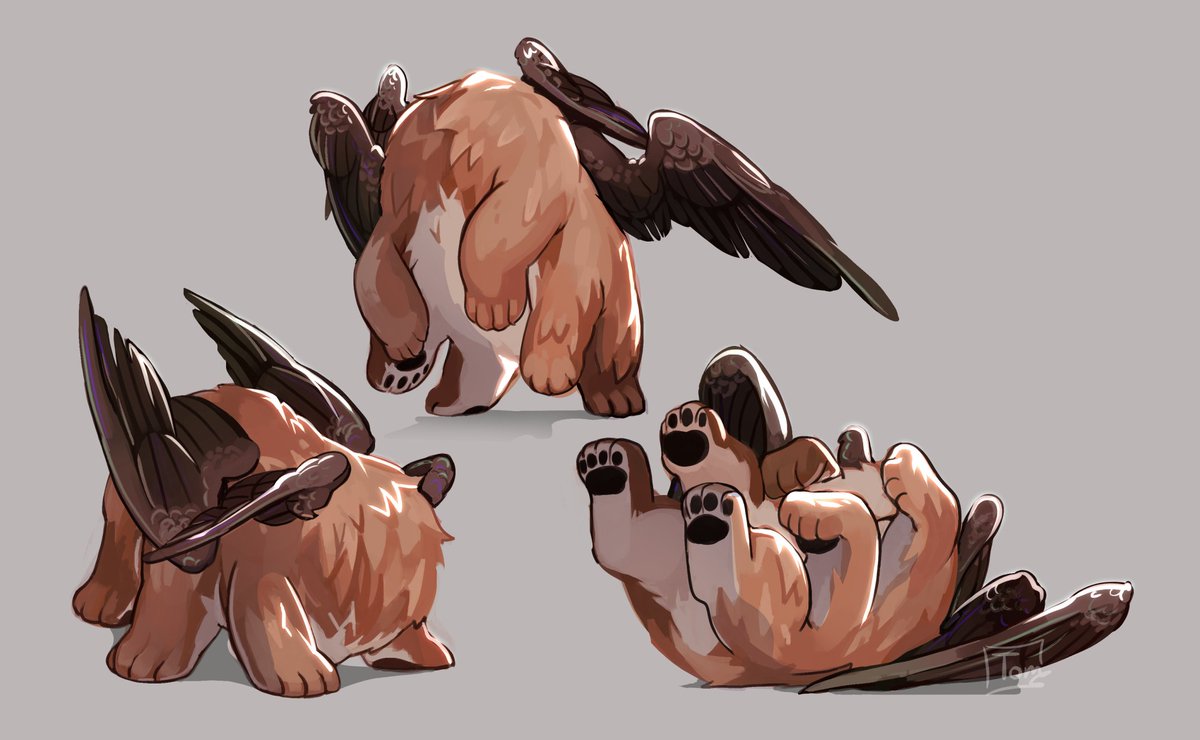
Not unlike a bigger gryphon but small, cute, and round. The Miniature Gryphon, "Mini-Gryph," or "Toy Gryphon" is a small form of its larger cousin that has been domesticated over centuries. They are much like housecats but with wings, although they can only hover and are not capable of long-distance flight. Also like housecats, they have a variety of different dispositions but were bred to have a more amicable personality. Can be a terror to the local ecosystem if they are not kept in check by their owners. Considered exotic pets, they are more difficult to find but can be acquired through the pet trade for enough coin.
Moth Kit [ IMG ]
Docile
Small, fluffy, and less of a nuisance than its wild counterpart, the domesticated Moth Kit is a new breed that's begun to appear following thef unusual Moth Hare migration. Breeders recommend Moth Kits be kept inside an enclosure, to prevent them from escaping or getting into your pantry, but they cannot fly as high as the Moth Hares or for as long a distance. They prefer to perch on shoulders or upon heads. Their diet consists of grains, fruit, and leafy greens. They can unleash a horrendous scream when frightened and are attracted to light sources. Warm climates are best suited for them. In colder areas, their enclosures should be kept heated. Currently, they only come in white and brown, but some are working on producing a variety of patterns and colors.

Independent

Docile
Mounts
Equestrian Breeds
Varied
Each region in Abraxas has its own horse breeds. Thorne uses larger steeds for labor and trail riding while more expensive breeds are owned by nobles as show horses and racing horses. The Haylean Warmblood is bred for Hayle's mountainous cold regions, and the oldest breed in Thorne, the Circinean, is named after Thorne's settlement by Lake Circinus. The Free Cities prefers powerful and lightweight breeds that can withstand the desert heat, including the long-enduring Aquilain and Catterport Thoroughbred. Solvunn has sturdy draft horses but prefers goats (see below).
Heidruun [ IMG ]
Docile
Massive thick-furred goats that are as strong as the largest draft horses. They're used for everything from pulling wagons to transporting goods and working the fields. They enjoy licking salt rocks as a treat. Stories say they helped shape the mountains by eating the rocks.
Varied

Docile
Rift Anomalies
The Rift Anomalies entered via open rifts during a previous event and are beasts or creatures from characters' canon worlds. While many of the more vicious ones were killed, lower threat Anomalies have been integrated into Abraxas. Dangerous beasts that were allowed to live have been properly contained.
Low-Threat Anomalies
Cactaur [ IMG ]
Passive | Desert-dwelling
A plant-like creature that resembles a cactus with arms. They have a reputation for doing a little spin in a pose that looks like they're running. The smaller versions are "friendly" as long as they are not attacked and are happy to let anyone pass by without issue. Should they feel threatened, they are known to spray needles at their enemies.
Demobat [ IMG ]
Passive | Cave-dwelling
They don’t have eyes, but they do have long tails that can be used to grab and strangle prey and very sharp teeth. Don't underestimate those teeth - they're capable of biting through human flesh. Comparable in size to a flying fox with black blood. They’re unlikely to attack unprovoked and will mind their own business like a normal bat.
Direwolf
Passive | Forest/woodland-dwelling
Young direwolves resemble the size of a German Shepherd but grow larger in adulthood. They will not attack unless provoked. Because they closely resemble regular wolves, many have integrated into the Abraxas wolf population. It can be difficult to tell them apart unless one is highly familiar.
Ganal
Harmless | All areas
Ganal are similar to red-coated weasels from Earth in behavior and appearance, with a few biological differences. Ganal have belly pouches that they use to carry things (bedding for nests, food). They also reproduce by laying clutches of eggs. The yolks inside are a deep red.
Mutated Raccoons
Aggressive | Forest/woodland-dwelling
These raccoons are either mutated or inbred to the point of genetic deformity, having glowing red eyes, becoming durable enough to survive being run over and growing larger than normal (their alpha can get to 3 feet long). Aggressive if approached and will scratch, claw, and maul to get free, but rarely will attack without provocation.
Gold Chocobo [ IMG ]
Passive | All areas
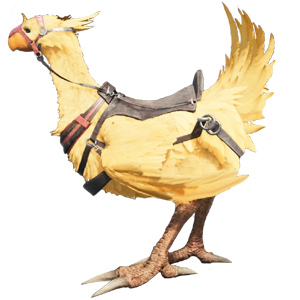
A large avian creature that is generally used as a mount, for racing or various tasks often suited to beasts of burden. They have long necks, large wings, and three-toed feet. Very feathery-fluffy, and make a lot of “kweh!” noises. It can cross all sorts of difficult terrain that its other brethren cannot.
Nutkin [ IMG ]
Harmless | All areas
Small rodent creatures who are, as their name would imply, obsessed with collecting nuts and acorns and carrying them around with them. While many are shy, there are rare ones that are quite brave and serve as good companions. They can bite if threatened or provoked but are otherwise harmless. More domesticated ones might hang out on your shoulder.
Shifty-Looking Cow [ IMG ]
Pest | All areas
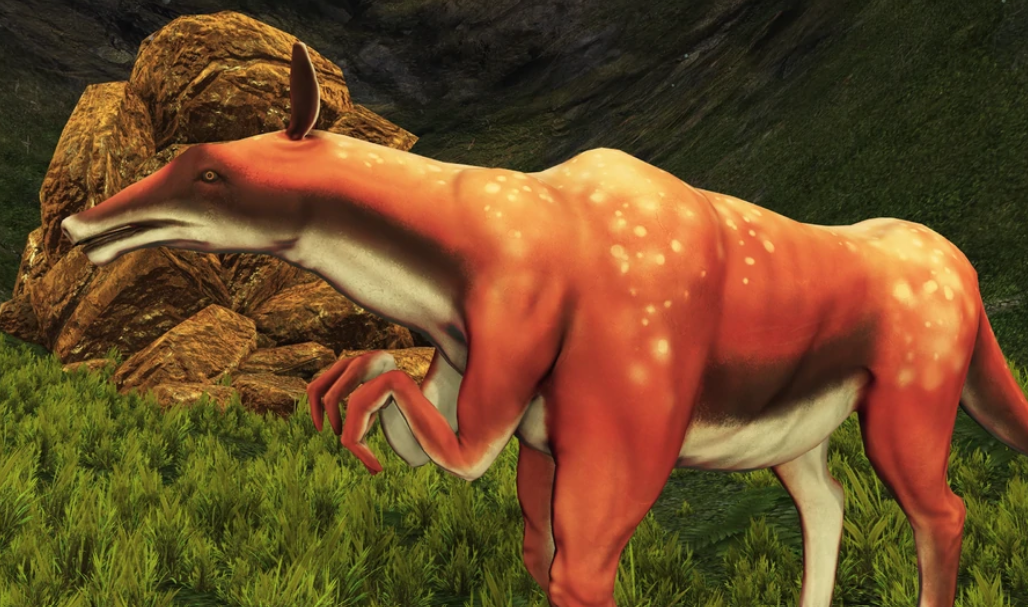
They resemble deer-tapir hybrids, except for one notable feature. These creatures have hands. They have no special powers, no toxins, and are docile. However, when faced with a sentient creature, they will select a target to slowly follow, waiting until the target's back is turned... and then... steal their money. This continues so long as the target's back is turned. Facing the cow will end the theft, and the cow will wander off.
Tomas [ IMG ]
Docile | All areas
Tomases are the pack animals of the Trigun universe. They are comparable to domesticated horses, mules, or donkeys. They're immediately recognizable by their brightly colored plumage and are close cousins to other flightless birds like ostriches and emus. A few are being bred and domesticated in Solvunn.
Worm [ IMG ]
Harmless
Insects found on Gunsmoke. They are varied in size and appearance, but this specific worm can fly and appears to look like a bigger dragonfly. They have no known abilities but are apparently edible.
Wyvern (Juvenile) [ IMG ]
Passive | All areas
Baby wyverns act similarly to baby birds; they imprint on their caretaker provided they are shown respect and kindness but still need to be fed and taken care of. They hop around on their two feet until they learn how to fly, but at this age, they can't fly very high or for long periods. Baby wyverns are about as big as house cats but weigh less than they appear. Any wyverns in the wild will likely integrate into the local wyvern population in Thorne and the Free Cities.

Passive | Desert-dwelling

Passive | Cave-dwelling
Passive | Forest/woodland-dwelling
Harmless | All areas
Aggressive | Forest/woodland-dwelling
Passive | All areas

Harmless | All areas
Pest | All areas

Docile | All areas
Harmless
Passive | All areas
Anomalous Beasts
Morbol [ IMG ]
Aggressive | The Badlands
A giant plant creature with a gaping maw, many tentacles, and a bad attitude and even badder breath. It can fling itself around with ease or bury under the ground, then spring up somewhere else. Its giant mouth is lined with numerous teeth. The worst thing about a morbol is its breath: it paralyzes, blinds, poisons, and otherwise weakens anyone caught in it. The morbol is currently isolated in the Badlands for study and is under official protection from poaching.
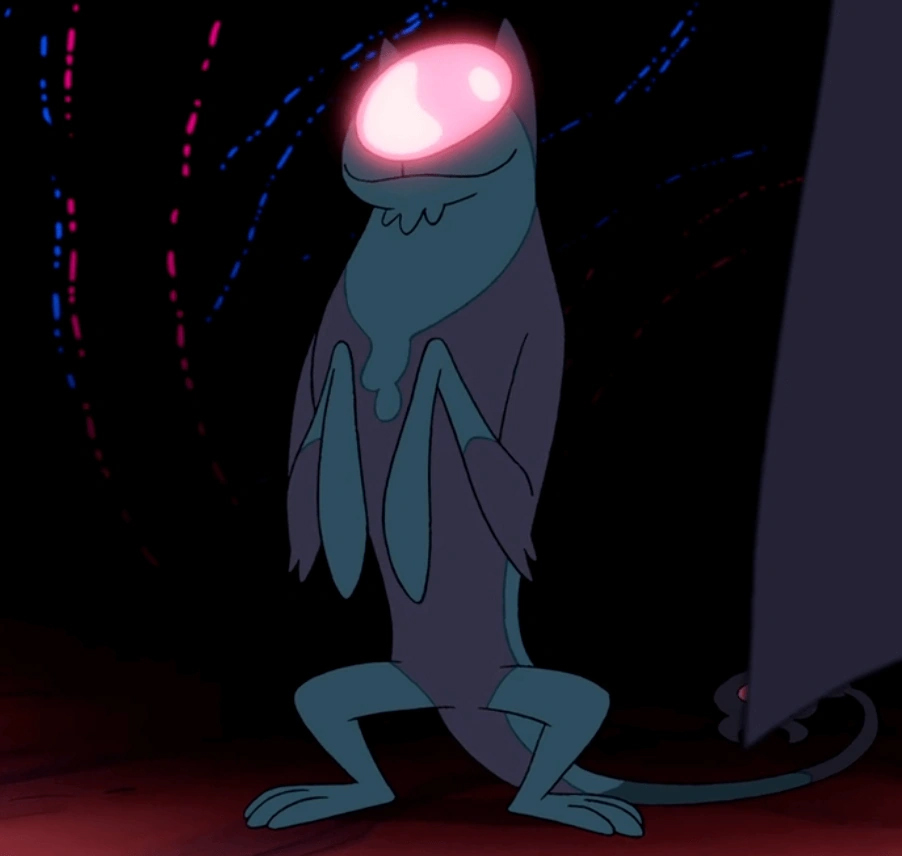
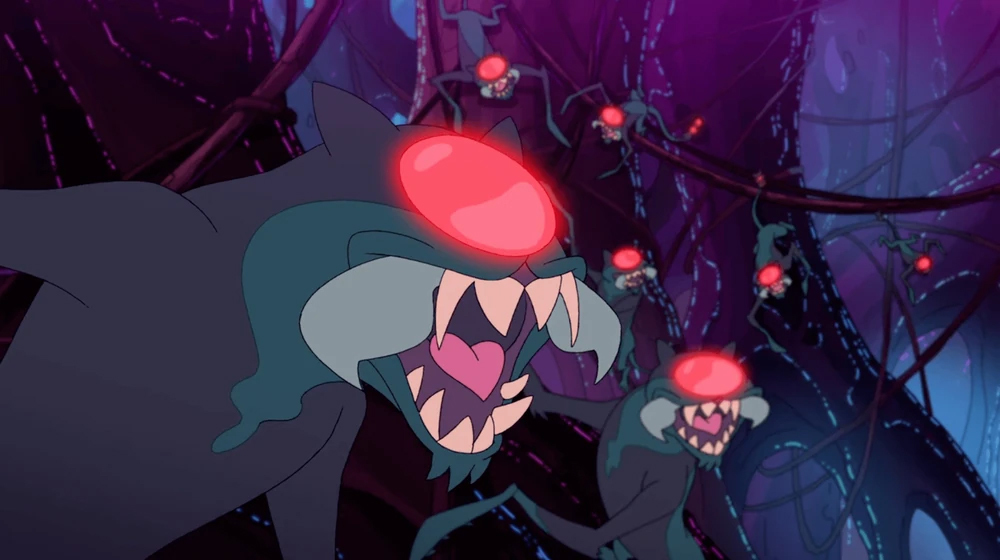
Pooka [ IMG | IMG ]
Passive | Solvunn Woods
Adorable and almost doglike, the distinctive feature of pookas is the large, singular glowing pink eye. They can walk on two legs, and their sideways-jointed forelegs let them cling to sheer surfaces or hang upside down. When opening their mouths, side-jointed mandibles emerge from between sharp fangs. They hunt in packs, and have razor-sharp teeth, and can be scared off by anything larger than them.

Aggressive | The Badlands
Passive | Solvunn Woods